A diabetes diagnosis can feel overwhelming at first, but here's the reassuring part: with the right diet, daily habits, and medical guidance, most people with diabetes go on to live full, active lives. The key is consistency — small, sustainable changes matter far more than dramatic short-term fixes.This guide covers the practical basics of managing …

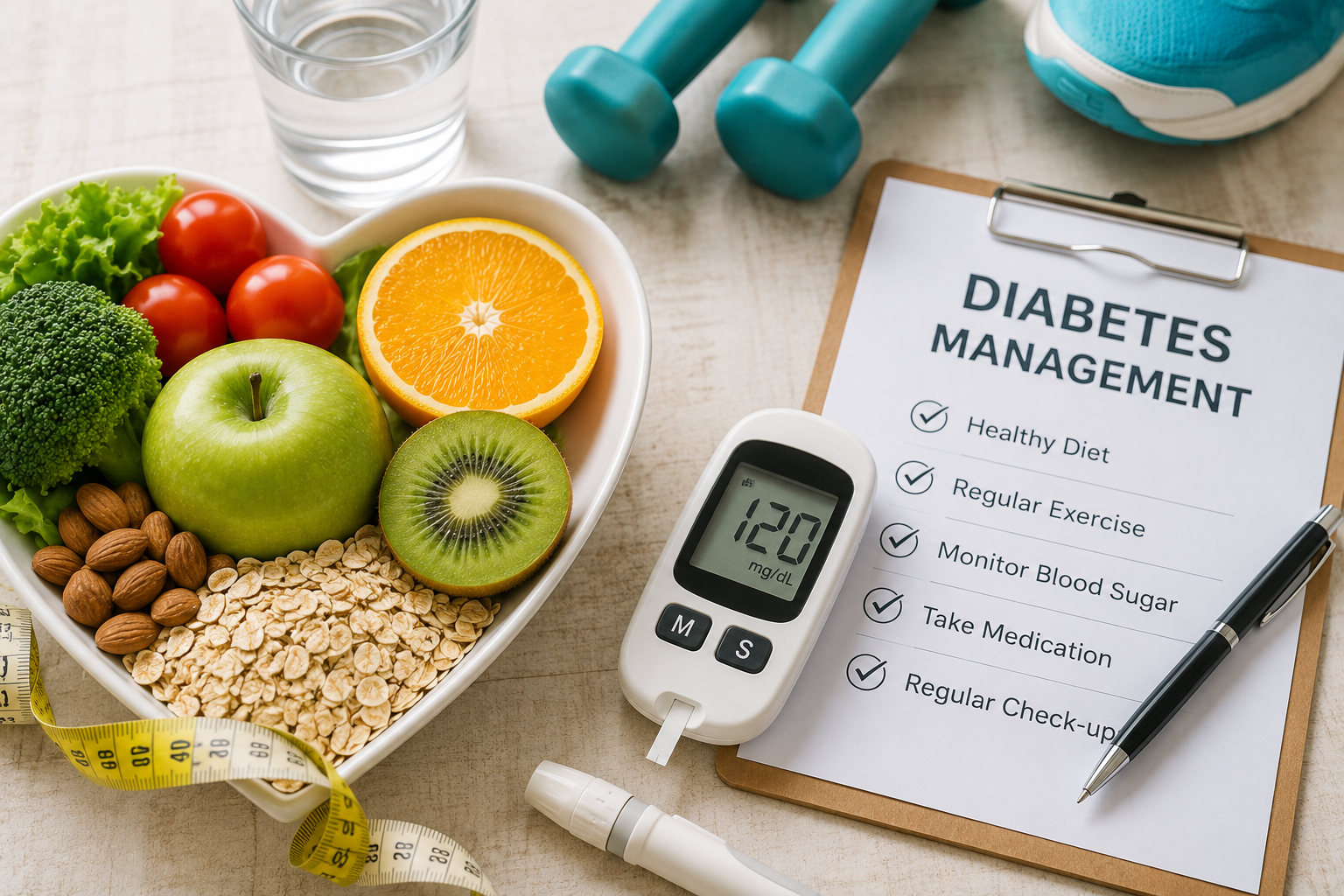
A diabetes diagnosis can feel overwhelming at first, but here’s the reassuring part: with the right diet, daily habits, and medical guidance, most people with diabetes go on to live full, active lives. The key is consistency — small, sustainable changes matter far more than dramatic short-term fixes.
This guide covers the practical basics of managing diabetes day to day, and the warning signs that mean it’s time to talk to a doctor.
At Vedant Hospital’s dental care unit in Thane, we see this fear play out every week: patients delaying treatment out of anxiety, only to end up with a more painful, more expensive extraction later. Let’s clear up the confusion, myth by myth.
A diagnosis is not a life sentence — it's a starting point. Every small choice you make today ,a walk after dinner, a balanced meal, an extra hour of sleep, is a step toward a longer, healthier life. You don't have to get it perfect. You just have to keep going, and you don't have to do it alone.
Dr Harshvardhan Singh
Understanding the Basics
Diabetes occurs when your body either doesn’t produce enough insulin (Type 1) or doesn’t use insulin effectively (Type 2), leading to elevated blood sugar levels. Type 2 diabetes — the more common form in adults — is strongly influenced by diet, weight, and activity level, which is why lifestyle management plays such a central role in treatment.
Diet Tips for Better Blood Sugar Control
- Prioritize Complex Carbohydrates: Whole grains, legumes, and vegetables release glucose into the bloodstream more slowly than refined carbs like white rice, maida, and sugary snacks. Swapping white rice for brown rice or millets, and refined flour for whole wheat, can meaningfully improve blood sugar stability.
- Watch Portion Sizes, Not Just Food Type: Even healthy carbs raise blood sugar if eaten in large quantities. A simple guide: fill half your plate with vegetables, a quarter with protein, and a quarter with whole grains.
- Don't Skip Meals: Skipping meals — especially breakfast — can cause blood sugar swings and overeating later in the day. Regular, balanced meals help keep glucose levels steadier.
- Choose Fiber-Rich Foods: Fiber slows sugar absorption and supports digestion. Vegetables, whole fruits (not juices), legumes, and whole grains are excellent sources.
- Limit Sugary Drinks and Processed Snacks: Sodas, sweetened tea/coffee, packaged juices, and fried snacks cause rapid blood sugar spikes. Water, unsweetened tea, and buttermilk are better everyday choices.
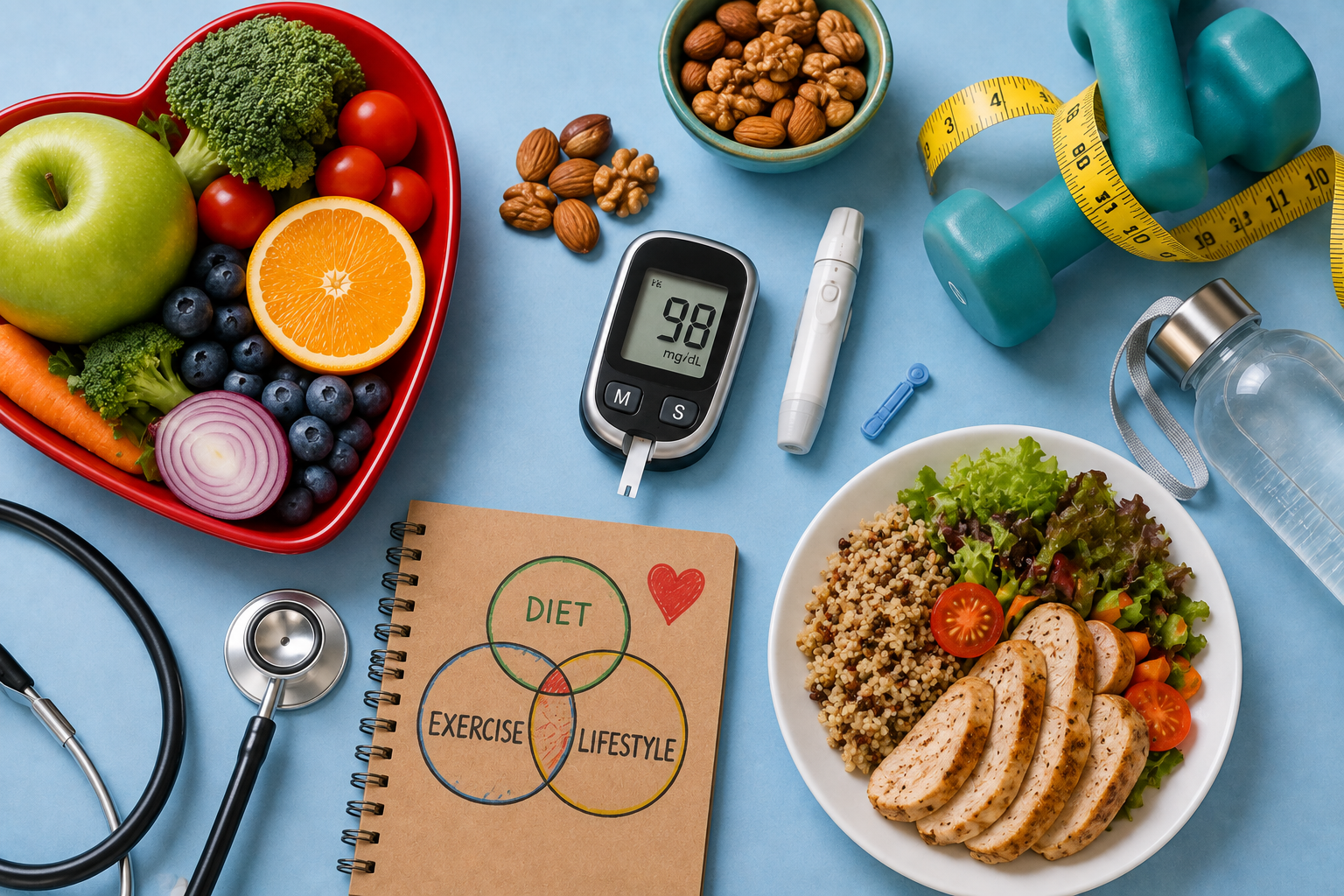
Lifestyle Habits That Make a Real Difference
- Move daily. Even a 30-minute brisk walk after meals helps muscles use glucose more efficiently, lowering post-meal blood sugar spikes.
- Prioritize sleep. Poor sleep is linked to insulin resistance. Aim for 7–8 hours of consistent sleep.
- Manage stress. Stress hormones can raise blood sugar levels. Simple practices like breathing exercises or a short daily walk can help.
- Monitor regularly. Home glucose monitoring (as advised by your doctor) helps you understand how specific foods and activities affect your levels personally.
- Stay consistent with medication. If prescribed insulin or oral medication, take it exactly as directed — skipping doses is one of the most common causes of poor control.
Warning Signs That Need Medical Attention
While day-to-day management is largely in your hands, certain signs mean it’s time to see a doctor promptly rather than waiting for your next scheduled visit:
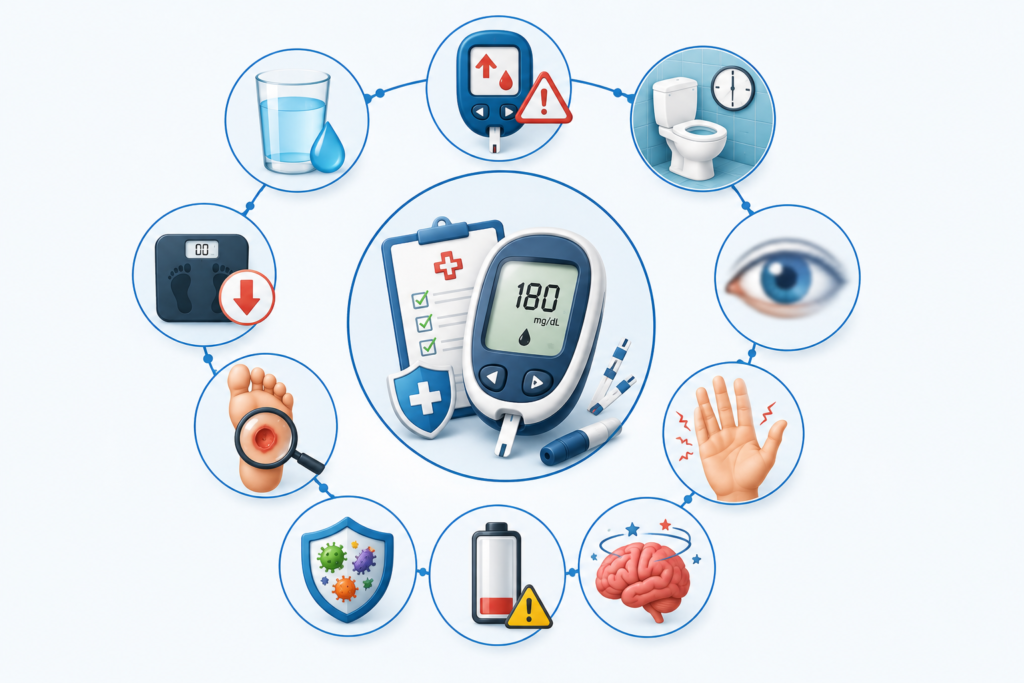
- Blood sugar readings consistently outside your target range
- Excessive thirst or urination that’s new or worsening
- Unexplained weight loss
- Blurred vision
- Slow-healing cuts or sores, especially on the feet
- Numbness or tingling in the hands or feet
- Frequent infections
- Extreme fatigue or confusion (which can signal dangerously high or low blood sugar and needs urgent care)